-
대학/대학원
-
연구/산학
-
대학생활
-
입학/취업
-
커뮤니티
-
대학소개
-
개교 80주년
커뮤니티
부경투데이
- 국립 부경대학교의 다양한 모습과 소식을 접하시면 부경대학교가 한번 더 가까워집니다.
| 네이처 자매지가 주목한 연구는? (What research did journal Nature's sister journal focus on?) | |||
| 작성자 | 대외협력과 | 작성일 | 2019-12-05 |
| 조회수 | 686 | ||
| 네이처 자매지가 주목한 연구는? (What research did journal Nature's sister journal focus on?) | |||||
 |
대외협력과 |  |
2019-12-05 |  |
686 |

|
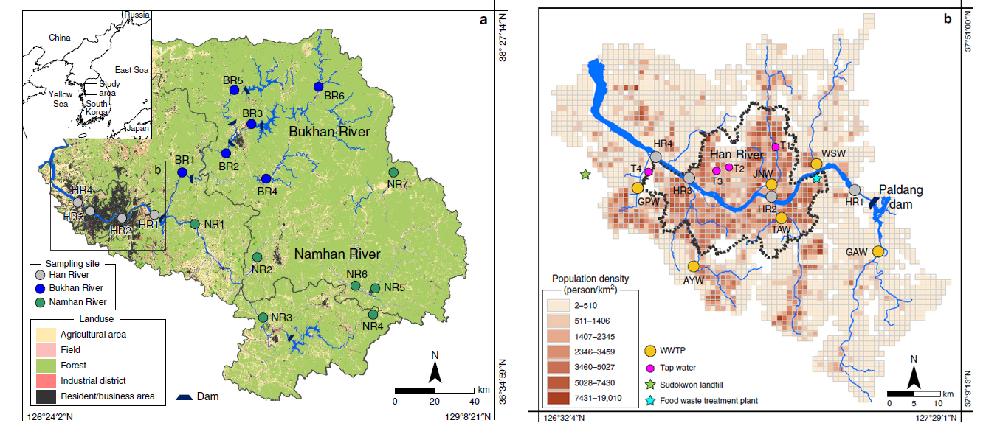
류 교수는 한국기초과학지원연구원, 프랑스 국립과학연구센터(CNRS) 등과 공동으로 진행한 이번 연구에서 북한강 6곳, 남한강 7곳, 한강 4곳 등 총 17개 지점에서 물을 떠 리튬 함량을 조사하고 결과를 밝혔다. 이번 조사에 따르면 북한강과 남한강에서 채취한 시료의 리튬 농도는 다른 국가의 강에 비해 낮았지만, 서울을 지나는 한강에서 채취한 시료는 두 강의 시료에 비해 리튬 함량이 최대 6배 높은 것으로 나타났다. 연구팀은 인구밀도 증가에 따라 강물 속 리튬 함량이 급격히 증가하는 것을 확인하고, 그 원인으로 리튬이차이온전지나 조울증 치료제와 같은 인위적 물질을 지적했다. 이번 연구의 교신저자인 류종식 교수는 “최근 각종 디지털 기기의 발달과 전기차 보급 확대 등으로 리튬이차이온전지의 수요는 급격히 증가하고 있지만 아직까지 국내에서는 폐 리튬이차이온전지의 회수‧재활용‧처리 시스템이 구축되지 않았고, 앞으로 잠재적 환경오염원이 될 가능성이 높지만 인위적 요인이 자연 내 리튬의 함량에 미치는 영향에 대한 연구는 전무한 실정”이라고 밝혔다. 연구팀은 현재 수처리 및 정수처리 기술로는 리튬을 제거할 수 없다는 사실도 확인했다. 한강 유역에서 나온 폐수를 처리하는 하수처리장에서 유입수와 처리수, 수돗물 분석을 분석한 결과 폐수 처리 전과 후의 리튬 농도, 동위원소 비율은 거의 달라지지 않는 것으로 나타났다. 류 교수는 “향후 인위적 리튬오염에 의한 생태계 및 인체에 미치는 악영향을 최소화하기 위해 폐 리튬이차이온전지 관리 등 해결책 마련과 추가적인 연구가 필요하다.”고 밝혔다. <부경투데이> The research results that the cause of the increase in lithium concentration in the Han River is due to artificial materials such as lithium secondary ion battery is attracting attention. Professor Ryu Jong-sik (Department of Earth Environmental Sciences), Pukyong National University, presented the results of lithium content and isotope surveys on river water, tap water, and potential pollutants in the Han River in the international journal <Nature Communications>. In this research, jointly conducted with the Korea Basic Science Institute (KBSI) and the French National Center for Science and Research (CNRS), professor Ryu collected and investigated water from 17 locations, including six spots from Bukhan (North Han) rivers, seven spots of Namhan (South Han) rivers, and four from Han rivers and anounced the results. According to the survey, lithium concentrations of samples taken from the North and South Han rivers were lower than those from other countries, but samples from the Han river passing through Seoul showed up to six times higher lithium than those from the two rivers. The researchers found that the lithium content in the river rapidly increased as the population density increased, and pointed to artificial substances such as lithium-ion batteries and manic-depressive drugs. Professor Ryu Jong-sik, a corresponding author of the study, said, “Recently, the demand for lithium ion batteries has been rapidly increasing due to the development of various digital devices and the expansion of electric vehicles. However, the recovery, recycling and treatment system of waste lithium ion batteries have not been established in Korea. Although it is likely to become a potential environmental pollutant in the future, little research has been conducted on the effects of human factors on the lithium content in nature.” The team also confirmed that current water treatment plant and water treatment technologies cannot remove lithium. The treated and tap water analysis in the sewage treatment plant treating the wastewater from the Han River basin showed that the lithium concentration and isotope ratio before and after the wastewater treatment were hardly changed. Professor Ryu said, "To minimize the adverse effects on the ecosystem and human body caused by artificial lithium pollution in the future, it is necessary to prepare solutions and further research, such as the management of waste lithium secondary ion batteries." <Pukyong Today> |

 부경대학교 류종식 교수(지구환경과학과)는 한강 내 강물, 수돗물, 잠재적 오염원에 대한 리튬 함량 및 동위원소 조사 결과를 4일 국제저널 <네이쳐 커뮤니케이션즈>에 발표했다.